Making 10 Class 1 Worksheet
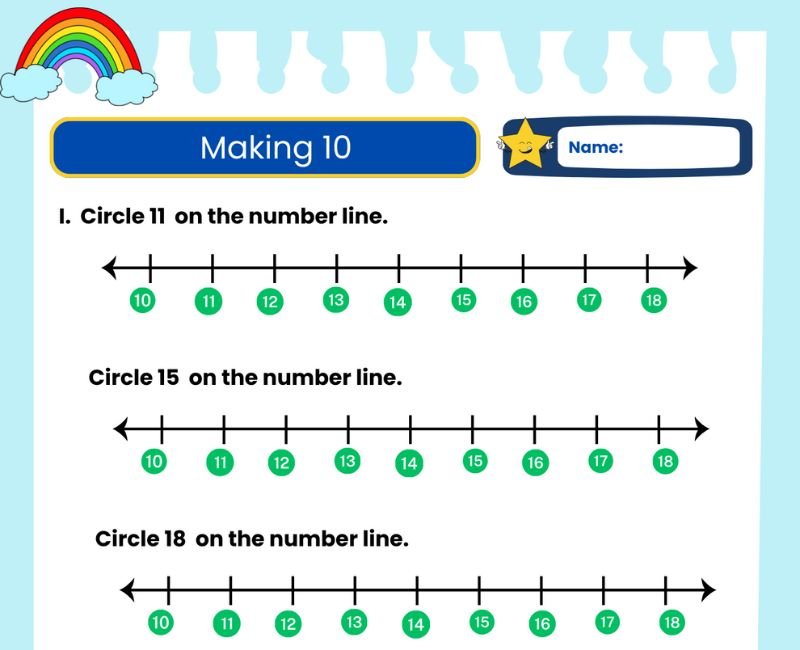
Explore groups of ten with this Making 10 Class 1 worksheet, a resource to use alongside NCERT Class 1 Maths Chapter 4 - Making 10 (Numbers 10 to 20) in Joyful Mathematics.
Move beyond reciting number names by helping children see how quantities are built. Practise pairs that make ten, understand zero and represent numbers up to twenty using a group of ten and some extra objects. The original questions with answers below provide additional practice alongside the worksheet available on this page.
How Do Two Numbers Make 10?
Place ten counters on a table and separate them into two groups. If one group contains six counters, the other contains four. Together, they still make ten. Move one counter between the groups and discuss what changes and what stays the same.
Pairs that make 10: 0 + 10, 1 + 9, 2 + 8, 3 + 7, 4 + 6 and 5 + 5. Reversing a pair also gives ten: 8 + 2 and 2 + 8 have the same total.
Let children build these combinations before asking them to remember them. Ask, "You have seven counters. How many more do you need to make ten?" Encourage them to count the empty places or add counters until the total reaches ten.
Use a Ten-Frame to See the Missing Quantity
Draw two rows of five boxes to make a ten-frame. Put one counter in each box, filling the top row first. With eight counters in the frame, two boxes remain empty. This shows that eight needs two more to make ten.
A full frame represents ten. Use a second frame when exploring larger quantities. For fourteen, fill the first frame and place four counters in the second. Children can see a full group of ten and four more without starting their count again at one.
Understand Zero as No Objects
Put three blocks in a basket. Remove them one at a time, counting how many remain. When the basket is empty, it contains zero blocks. Write 0 beside the empty basket.
Compare an empty basket with one containing a block. Zero tells us there are no objects in the collection. Adding zero to a collection leaves its quantity unchanged: five blocks and no extra blocks still make five.
Numbers 10 to 20: One Ten and Some More
Make a bundle of ten sticks and keep the remaining sticks loose. For thirteen, use one bundle and three loose sticks. Count the bundle as ten, then continue: eleven, twelve, thirteen.
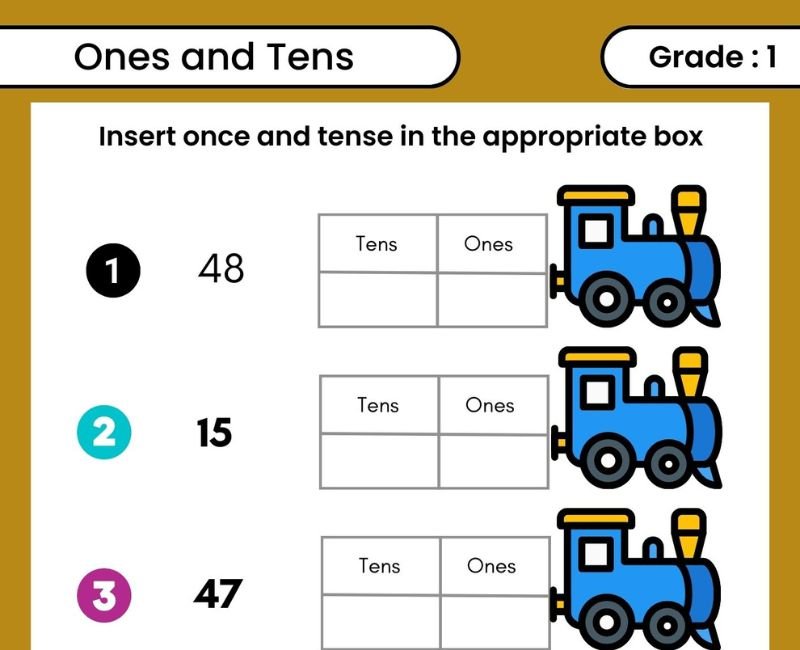
12 = 10 + 2
15 = 10 + 5
18 = 10 + 8
20 = 10 + 10
Explain that twenty can be represented by two complete groups of ten. Match each collection with its numeral and number name. Use twelve, thirteen, fourteen, fifteen, sixteen, seventeen, eighteen and nineteen in short spoken activities so children connect each name with its quantity.
Compare and Order Numbers up to 20
Arrange number cards from 10 to 20. Remove a card and ask the child to identify the missing number. Start with a short sequence, such as 14, 15, blank, 17, before using the complete set.
To compare fourteen and seventeen, make a group of ten for each number. Then compare the extra objects: four extras are fewer than seven extras, so fourteen is smaller than seventeen. This makes the comparison visible and encourages children to explain their answer.
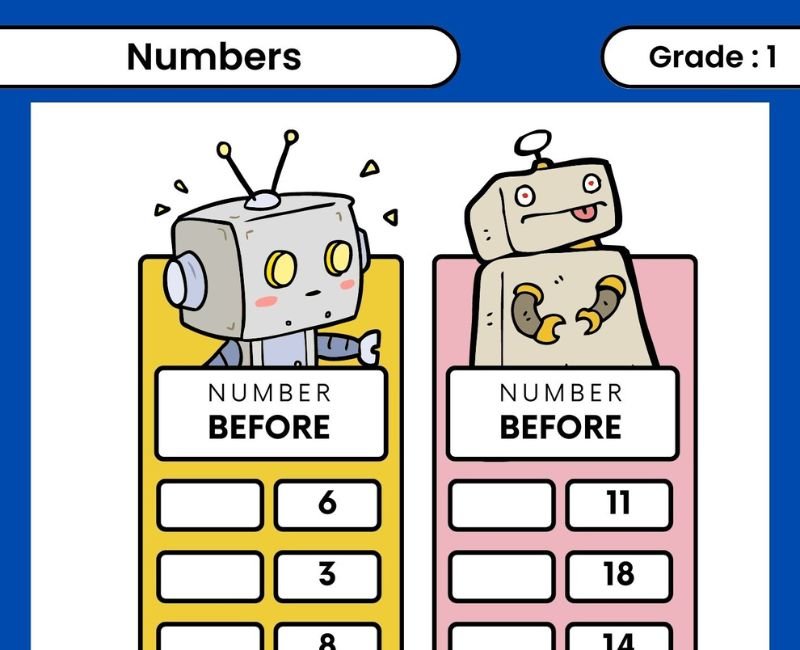
Practise the number before and after a familiar number. The number before 16 is 15, and the number after 16 is 17.
Original Making 10 Practice Questions with Answers
Use these additional questions orally or in a notebook. Build each example with counters if the child needs support.
- Complete: 7 + ______ = 10.
- Complete: 4 + ______ = 10.
- A basket has no apples. How many apples are in it?
- One group of ten and five more make ______.
- Write 18 as 10 + ______.
- Complete: 13, 14, ______, 16.
- Which is greater: 12 or 19?
- What number comes just before 20?
- Arrange 17, 11 and 14 from smallest to largest.
- Riya has eight blocks. How many more does she need to make ten?
Show Practice Answers
1. 3
2. 6
3. 0
4. 15
5. 8
6. 15
7. 19
8. 19
9. 11, 14, 17
10. 2
Using the Chapter 4 Worksheet at Home or School
Use the worksheet download option on this page for written practice alongside the NCERT textbook. Read instructions aloud when needed and discuss what each picture represents before the child writes an answer.
Keep practice short and purposeful. Begin with counters, move to drawings and then use written numbers. If a child writes 51 instead of 15, ask them to build fifteen with a group of ten and five extras before correcting the numeral.
Check understanding by asking children to show another pair that makes ten or explain how they know a quantity is sixteen. The answers above apply to the original on-page examples; picture-based worksheet answers depend on the pictures provided.
More NCERT Class 1 Maths Worksheets
Explore these related NCERT Joyful Mathematics chapter worksheets.
Mango Treat - Chapter 3Revisit counting and numbers from 1 to 9. Vegetable Farm - Chapter 6
Continue with addition and subtraction up to 20. Fun with Numbers - Chapter 8
Explore numbers from 21 to 99. So Many Toys - Chapter 13
Count and compare collections in data-handling activities.
Related General Grade 1 Maths Practice
Comparing Numbers Worksheets for Class 1Extra topic-based practice for comparing numbers. Browse All Class 1 Maths Worksheets
Find general topic worksheets and NCERT chapter resources.
Making 10 Class 1 FAQs
Which chapter is Making 10 in NCERT Class 1 Maths?
Making 10 is Chapter 4 of Joyful Mathematics. The chapter introduces work with numbers from 10 to 20.
What are number pairs that make ten?
They are two numbers whose total is ten, such as 3 and 7, 4 and 6, or 5 and 5.
How can I teach making ten without memorisation?
Use ten counters or a ten-frame. Let children split the counters into groups or fill empty spaces to make a total of ten.
What does zero mean for a Class 1 child?
Zero represents no objects in a collection. An empty basket has zero objects.
How do I explain teen numbers?
Show one group of ten and the extra objects. Sixteen, for example, is ten and six more.
Is twenty one ten and ten more?
Yes. Ten and ten more make twenty, which is also two complete groups of ten.
How can children compare 14 and 18?
Represent each number as ten and some extras. Eight extras are more than four, so eighteen is greater than fourteen.
Are answers provided for the practice questions?
Yes. Expand Show Practice Answers to check the ten original questions on this page.
 Download