The Proposal Class 10 Worksheet with Answers
A marriage proposal becomes a succession of arguments over land and dogs. Use The Proposal Class 10 worksheet with answers to practise explaining how dialogue, exaggerated reactions and sudden changes of attitude create comedy.
Attempt the questions independently before checking the answers. Support your interpretations with relevant exchanges and actions from the play rather than relying on a memorised plot summary.
Practise Reading a Play Closely
“The Proposal” by Anton Chekhov is a one-act comic play featuring Lomov, Natalya and Chubukov. Understanding their competing intentions is essential to explaining why a simple visit becomes so chaotic.
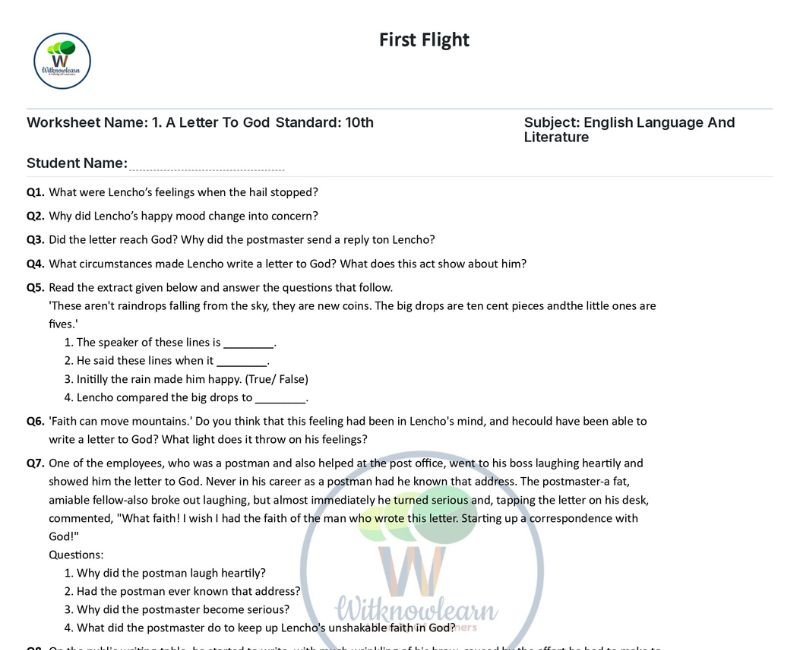
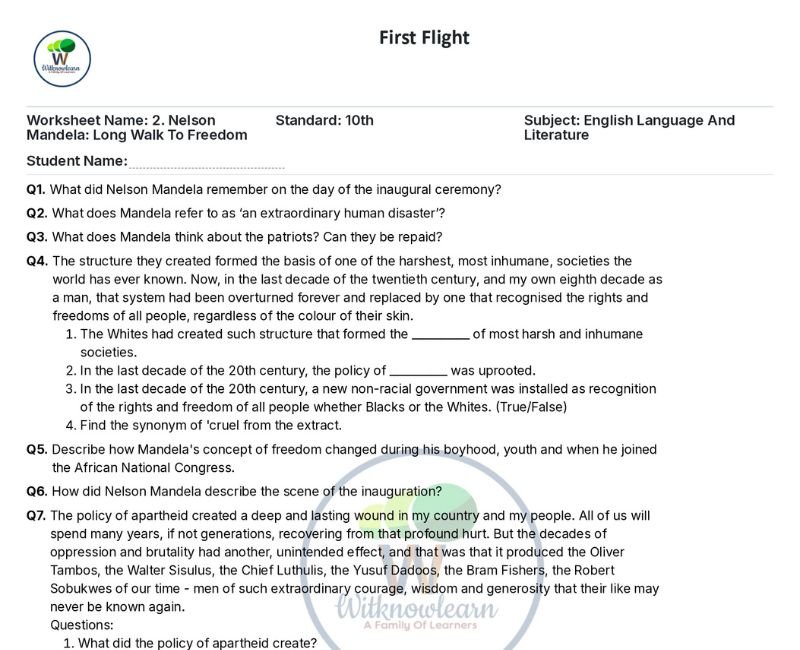
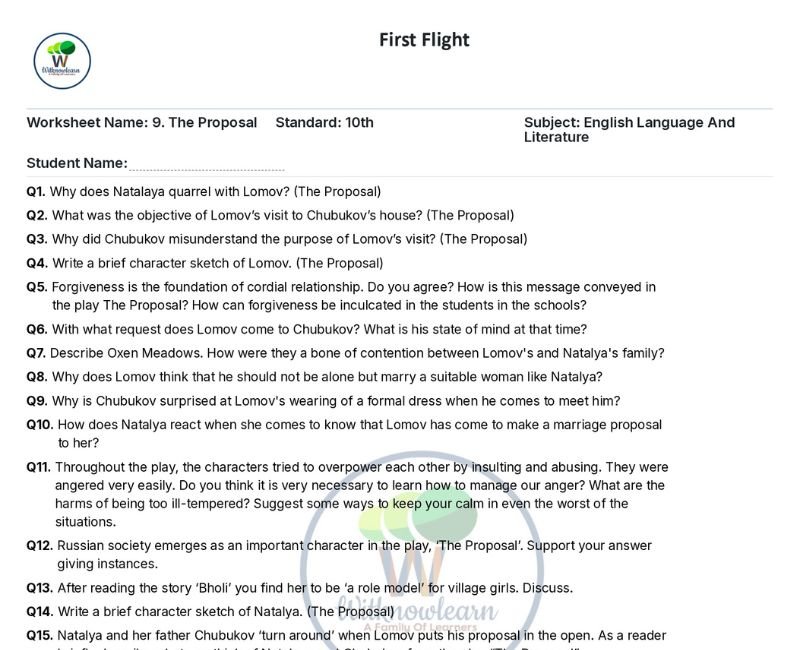
This worksheet follows a mixed English practice format, combining short and long-answer work with extract-based questions, objective responses and vocabulary activities. Use the tasks to develop accurate comprehension, character analysis and interpretation of dramatic humour.
Unlike prose narration, a play communicates much of its meaning through speech and stage directions. Read both carefully: what a character says may differ from what the character’s actions reveal.
Connect Lomov’s Intention with His Behaviour
Questions about Lomov’s visit require you to distinguish his purpose from the arguments that interrupt it. Explain what he hopes to achieve and why he repeatedly loses sight of that aim.
For character questions, consider his formal manner, nervousness, concern about his health and determination to defend his claims. Select the details that suit the question instead of listing every characteristic.
A balanced answer can recognise that he wants marriage while also examining how pride and argumentativeness interfere with the proposal.
Practice Prompt: Explain a Contradiction
Question: How does Lomov’s behaviour undermine the purpose of his visit?
Answer approach: Identify his intention, select an argument that diverts him and explain how his insistence on winning delays the proposal. Connect the contrast with the play’s comedy.
Analyse Natalya’s Changing Attitude
Natalya’s reactions provide useful material for questions about motivation and irony. Compare her behaviour before learning why Lomov has come with her response afterwards.
Explain what causes the change rather than merely stating that she becomes anxious. Then consider how quickly another disagreement interrupts the attempt to repair the situation.
For a character sketch, connect her pride, assertiveness and eagerness for marriage with specific actions. Avoid treating a single outburst as a complete description of her personality.
Examine Chubukov’s Role in the Conflict
Chubukov welcomes the possibility of the marriage, yet he also becomes involved in the quarrels. Questions about his role should explain this tension between encouraging the match and escalating the disagreement.
When asked about his changing manner, compare his polite reception with his later accusations and urgency. Explain what the shifts reveal about his priorities.
A strong interpretation examines how he contributes to the comic situation rather than describing him only as a parent who approves of the proposal.
Keep the Two Disputes Separate
The arguments over Oxen Meadows and the dogs interrupt the proposal at different stages. Sequence questions require you to distinguish the subjects, claims and reactions involved.
For a question about a particular quarrel, select evidence from that exchange. Do not substitute details from the other disagreement simply because both demonstrate pride.
When asked what the disputes have in common, explain how personal attachment and the desire to be right outweigh the characters’ larger goal. This turns two remembered incidents into a supported comparison.
Do Not Treat a Character’s Claim as a Settled Fact
The characters make competing claims about property and their dogs. Report who argues what, and explain its role in the scene. Avoid presenting one speaker’s opinion as an objective judgement unless the question specifically asks for that viewpoint.
Answer Extract-Based Questions with Context
Identify the speaker, the person addressed and the point in the play before answering a dialogue extract. Notice whether the scene involves the arrival, the land dispute, the recalled proposal or the argument about dogs.
For extract-based MCQs, compare all options with the exchange. For True/False statements, check the entire claim. For fill-in-the-blank questions, ensure the answer fits the information and sentence structure.
Vocabulary questions require attention to tone. A polite expression, insult or exclamation may reveal a character’s attitude as well as its literal meaning.
| Question Area | Skill Developed | Answer-Writing Focus |
|---|---|---|
| Lomov’s visit | Motivation and contrast | Explain the difference between intention and behaviour. |
| Natalya’s reactions | Character development within a scene | Identify what causes a change in attitude. |
| Chubukov’s involvement | Role analysis | Show how he both encourages and disrupts the match. |
| Land and dog disputes | Sequence and comparison | Keep the exchanges distinct, then explain their shared pattern. |
| Dialogue and stage directions | Close reading of drama | Connect speech, action and tone. |
| Comedy and satire | Interpretation of dramatic effect | Explain how the humour exposes misplaced priorities. |
Explain Humour, Farce and Satire
A question about humour needs an explanation of how the scene becomes funny. Examine exaggeration, repeated interruptions, abrupt changes of attitude and the mismatch between a formal proposal and hostile arguments.
The physical reactions and escalating exchanges can be discussed as features of farce. Explain their effect on the audience rather than simply naming the technique.
For questions about satire, consider how the play exposes pride, possessiveness and practical calculations surrounding marriage. Support the interpretation with the characters’ priorities and behaviour.
Practice Prompt: Interpret the Ending
Question: How does the final argument strengthen the comic effect of the play?
Answer approach: Explain the contrast between the apparent resolution of the proposal and the immediate return to quarrelling. Show how the ending preserves the pattern established earlier.
Organise Short and Long Answers
For a short answer, state the main point, include a relevant exchange or action and explain its significance. Follow the word limit given in the task.
For a longer character sketch, organise selected qualities around evidence. For an answer on comedy, develop two or three techniques and explain how each operates in a specific situation.
Avoid writing the entire plot when asked about one character or comic device. Every sentence should answer the question, provide evidence or explain its effect.
Use the Answers to Improve Independent Practice
Complete the worksheet before checking the answers. Compare the meaning, evidence and reasoning rather than expecting identical wording.
- Check speakers: have you attributed the dialogue correctly?
- Check sequence: have you confused the two disputes?
- Check interpretation: have you explained why the scene is comic?
- Check expression: are your sentences clear and complete?
Teachers can use the worksheet after a classroom reading or role-play. Hearing the exchanges aloud can help students recognise tone before writing individual responses.
Related Interpretation Practice
For another example of a contrast between a character’s belief and the reader’s knowledge, try the A Letter to God Class 10 worksheet with answers.
Compare how the two texts use misunderstanding and misplaced judgement, supporting your response with evidence from each.
Frequently Asked Questions About The Proposal
Who wrote The Proposal?
Anton Chekhov wrote “The Proposal”. It is a one-act comic play centred on a marriage proposal repeatedly interrupted by arguments.
Why does Lomov visit Chubukov?
He comes to ask permission to marry Chubukov’s daughter, Natalya. His formal clothing and nervous manner reflect the importance he attaches to the visit.
What does Chubukov initially suspect?
He initially suspects that Lomov has come to borrow money. Learning that the visit concerns marriage changes his response.
What starts the first argument?
Lomov’s reference to Oxen Meadows leads to a dispute over ownership. The quarrel distracts him from explaining the purpose of his visit to Natalya.
Why does Natalya ask for Lomov to be brought back?
After he leaves, she learns that he had come to propose. She urgently wants him recalled because she is interested in the marriage.
What are the names of the dogs?
Lomov’s dog is Guess, and Natalya’s dog is Squeezer. Their disagreement concerns the relative merits of the two dogs.
Why is The Proposal considered a farce?
Its exaggerated reactions, escalating quarrels and repeated disruption of a simple proposal create an absurd comic situation. Explain these features through examples when answering.
What is significant about the ending?
The marriage is hastily agreed upon, but the characters resume arguing. The ending suggests that reaching the agreement has not changed their quarrelsome behaviour.
 Download