How to Tell Wild Animals Class 10 Worksheet with Answers
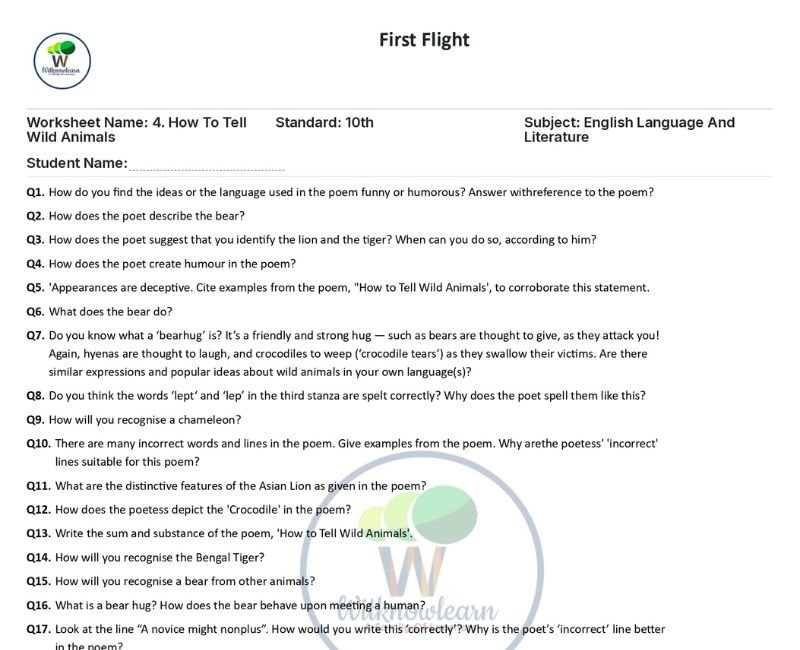
A supposed guide to identifying animals becomes a playful sequence of dangerous encounters and unexpected jokes. Use the How to Tell Wild Animals Class 10 worksheet with answers to practise explaining animal descriptions, comic exaggeration and Carolyn Wells’s use of language.
Attempt the questions independently before checking the answers. Support your interpretations with relevant details and explain what makes a description humorous.
Practise Identification and Interpretation Together
“How to Tell Wild Animals” invites readers to recognise familiar animals through a deliberately unusual set of clues. Its light-hearted manner makes it useful for practising tone, irony and the difference between literal information and comic invention.
The mixed English worksheet format supports short and long-answer work, extract-based questions, objective responses and vocabulary activities. Use factual tasks to check the descriptions and interpretive tasks to explain how the humour works.
Read the instruction first. Naming an animal answers an identification question; explaining why the clue is absurd requires a further step.
Match Each Animal with the Correct Description
Identification questions require careful attention to appearance, movement and the event described. Do not choose an animal solely because it is dangerous or belongs in a forest.
Keep the lion’s description separate from the tiger’s markings and the leopard’s repeated attacks. Similarly, distinguish the bear’s apparent embrace from the descriptions of the hyena and crocodile.
For a comparison question, choose a common basis such as appearance or the speaker’s method of identification. Explain the difference using the poem’s details.
Practice Prompt: Move Beyond Naming
Question: Why are some of the poem’s identification methods useless to the person encountering the animal?
Answer approach: Explain how recognition is presented as happening during or after an attack. Connect the delayed identification with the absurdity of the supposed advice.
Explain the Contrast between Advice and Danger
The speaker adopts the manner of someone offering helpful instructions. Questions about humour should examine the contrast between this calm, confident voice and the alarming situations described.
Explain why that mismatch matters. The advice sounds practical, but the imagined encounter makes it impossible or too late to use. This contrast gives the poem its comic structure.
Avoid reducing every answer to “the poem is funny”. Identify the unexpected detail, explain the contradiction and describe its effect on the reader.
Recognise Exaggeration and Playful Language
Hyperbole involves deliberate exaggeration. When identifying it, show which action is overstated and explain how the excess contributes to humour.
The poem also uses playful wording and unusual grammatical forms. Examine how these choices support rhyme, rhythm or a comic voice rather than treating them as accidental mistakes.
For a device question, provide the term and relevant evidence, then explain the effect when asked. Avoid assigning a device merely because a line describes an animal.
Separate Comic Description from Animal Facts
The poem plays with familiar ideas about animals to entertain readers. Explain its descriptions as literary choices rather than treating every clue as a scientifically reliable identification rule.
Read Extracts for Context and Tone
Identify the animal and the imagined situation before answering a passage-based question. Notice whether the humour depends on appearance, action, a familiar expression or the absence of a visible animal.
For extract-based MCQs, compare all options with the lines. For True/False statements, check the complete claim. For fill-in-the-blank tasks, ensure your response fits both the description and the sentence.
Vocabulary questions require contextual reading. A word may have a literal meaning while also contributing to a joke or an unexpectedly polite description of danger.
A Routine for Poetry Extract Practice
- Identify the animal or situation.
- Read the lines as a complete sentence.
- Locate the detail requested by the question.
- Separate the literal description from the comic effect.
- Support your explanation with a relevant clue.
When instructed to find a word from the extract, use the word appearing there rather than substituting your own synonym.
Interpret the Hyena, Crocodile and Chameleon
Questions comparing the hyena and crocodile should explain how the poem uses familiar associations with laughter and tears. State the difference presented, then discuss the playful effect.
The chameleon stanza offers a different kind of joke. Instead of identifying an animal through an attack, the speaker turns its difficulty of detection into the central clue.
A strong answer explains the surprising logic of recognising something because it cannot be seen. This contrast with the earlier encounters helps you discuss the poem’s variety.
| Question Area | Skill Developed | Answer-Writing Focus |
|---|---|---|
| Animal descriptions | Accurate comprehension | Match appearance and action with the correct animal. |
| The speaker’s advice | Understanding irony | Explain why the apparently helpful instruction is absurd. |
| Repeated or exaggerated attacks | Analysis of hyperbole | Connect overstatement with comic effect. |
| Hyena and crocodile | Comparison | Explain the contrasting associations used in the poem. |
| The chameleon stanza | Interpretation of a joke | Explain identification through apparent absence. |
| Rhyme and unusual wording | Recognition of form | Connect sound choices with rhythm and humour. |
Practise Rhyme and Sound Devices
Identify rhyme through the sounds of line-ending words. Give the pattern for the stanza requested and check that each repeated letter represents a matching sound.
For alliteration, look for repeated initial consonant sounds. For repetition, identify the recurring word or idea and explain how it reinforces an action or joke.
Reading the poem aloud can help you recognise its lively movement. When answering about rhythm, connect your observation with the playful presentation rather than making a general statement about poetry.
Write Clear Short and Extended Responses
For a short answer, state the main point, include a relevant detail and explain the connection. Follow the word limit given in the task.
For an extended answer about humour, organise two or three techniques. You might discuss the confident advisory voice, exaggerated danger and the surprising identification methods. Use a different relevant example for each point.
Keep the central interpretation appropriate to the poem. Its primary purpose is humorous, so avoid attaching a serious moral that the language does not support.
Use the Answers for Active Revision
Complete the worksheet before consulting the answers. Compare the meaning, evidence and reasoning rather than expecting identical wording.
- Check animals: have you matched each description correctly?
- Check humour: have you explained what creates the joke?
- Check devices: does your example support the term you named?
- Check expression: are your sentences clear and complete?
Rewrite an answer that names a technique without explaining its effect. Teachers can use the worksheet after a reading aloud, allowing students to hear the rhyme and comic tone before writing independently.
Related Poetry and Humour Practice
Compare a different portrayal of an animal through the A Tiger in the Zoo Class 10 worksheet with answers.
For another text using exaggeration and unexpected behaviour to create comedy, try The Proposal Class 10 worksheet with answers.
Frequently Asked Questions About How to Tell Wild Animals
Who wrote How to Tell Wild Animals?
Carolyn Wells wrote “How to Tell Wild Animals”. The poem presents humorous ways of recognising different animals.
How does the poem describe the Bengal tiger?
It identifies the tiger through black stripes on a yellow coat and an imagined attack. The dangerous encounter makes the supposed identification advice comic.
What identifies the leopard in the poem?
The spotted hide and repeated leaping attacks identify the leopard. The repetition emphasises the exaggerated, alarming encounter.
Why is the bear’s embrace humorous?
The description makes a dangerous attack sound like an affectionate hug. The contrast between friendly wording and threat creates humour.
How are the hyena and crocodile distinguished?
The poem associates the hyena with laughter and the crocodile with tears. These familiar associations become playful identification clues.
What is funny about the chameleon stanza?
The speaker suggests recognising the chameleon through its apparent absence on a tree. The joke depends on its being difficult to see.
What is the stanza rhyme scheme?
The six-line stanzas follow an ABABCC pattern. Check the scheme through the sounds of the line-ending words.
How should I explain the poem’s humour?
Identify a specific technique, such as exaggeration, ironic advice or unexpected wording. Use an example and explain why it creates a comic contrast.
 Download