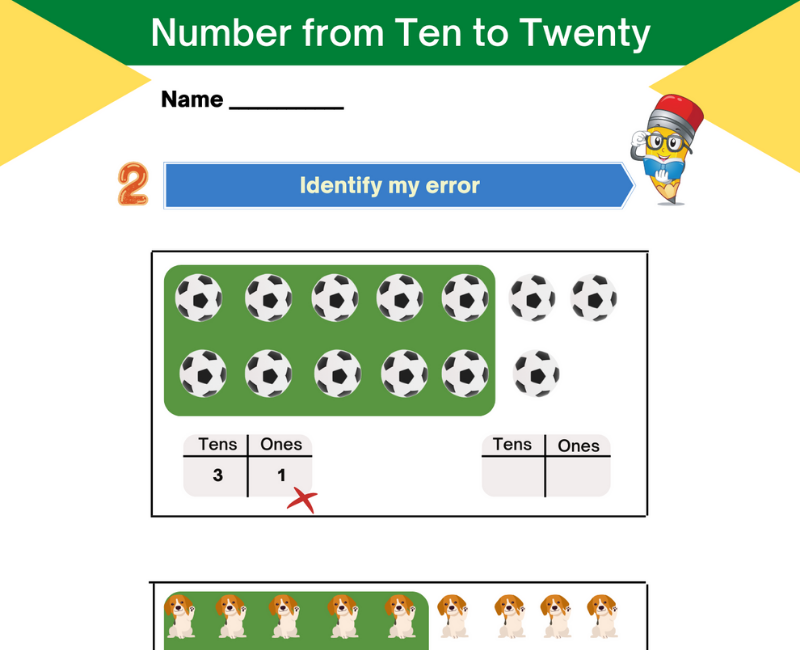
Numbers 1 to 20 Worksheet for Class 1
Help your child connect counting with quantities using this numbers 1 to 20 worksheet for Class 1. Learning to say the numbers is a useful beginning, but children also need to recognise each numeral, count the correct number of objects and write the number that represents the total.
Use this resource for Class 1 maths practice at home or in the classroom. Pair written work with counting pencils, blocks or counters so children can see what each number means. The extra practice below covers number recognition, counting from 1 to 20, missing numbers, number order and an introduction to tens and ones.
Counting Numbers from 1 to 20
Begin by reading the numbers aloud together. Point to each numeral as you say its name. Once your child recognises the sequence, ask them to start counting from a different number, such as 6 or 12, rather than always beginning at 1.
Numbers 1 to 10: 1, 2, 3, 4, 5, 6, 7, 8, 9, 10
Numbers 11 to 20: 11, 12, 13, 14, 15, 16, 17, 18, 19, 20
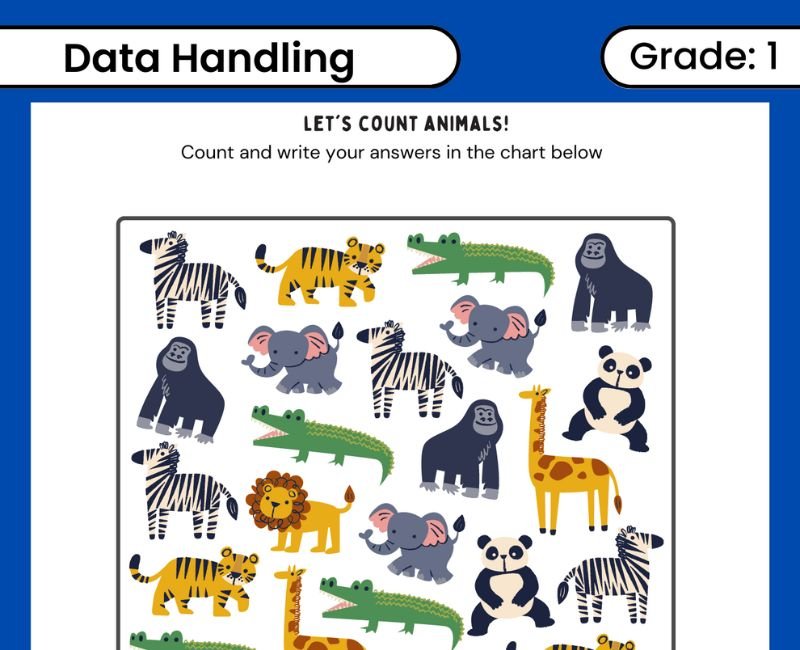
When counting objects, encourage your child to touch or move each object once. The last number said tells how many objects there are altogether. For example, if the count ends at 14, the group contains fourteen objects.
Understanding Numbers 11 to 20 with Tens and Ones
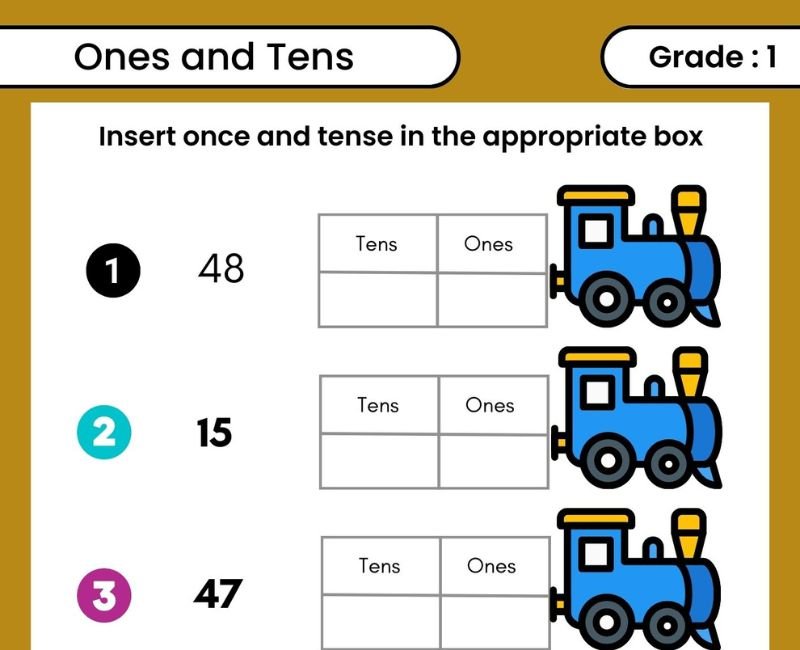
Numbers beyond ten become easier to understand when children build a group of ten first. Arrange ten counters together, then place the remaining counters beside them. This makes the quantity visible instead of relying only on memorising the counting sequence.
12: 1 ten and 2 ones
15: 1 ten and 5 ones
19: 1 ten and 9 ones
20: 2 tens and 0 ones
Ask your child to build seventeen using counters, identify the group of ten and count the seven extra ones. Then write 17 together. This connects the spoken number, its written form and its quantity.
Recognising and Writing Numbers Correctly
Show number cards in a mixed order and ask your child to read them. Recognising 16 when it appears on its own is different from reciting “sixteen” during a familiar counting sequence. Follow this with a short writing task: say a number, let your child build its quantity and then ask them to write it.
For two-digit numbers, check the order of the digits. Eighteen is written as 18: the 1 shows one ten and the 8 shows eight ones. If your child reverses the digits or writes a digit backwards, model the correct form and give them another chance without rushing.
Keep handwriting practice manageable. Writing a few numbers carefully, reading them aloud and checking their quantities can be more useful than filling a whole page without understanding.
Number Order and Missing Numbers up to 20
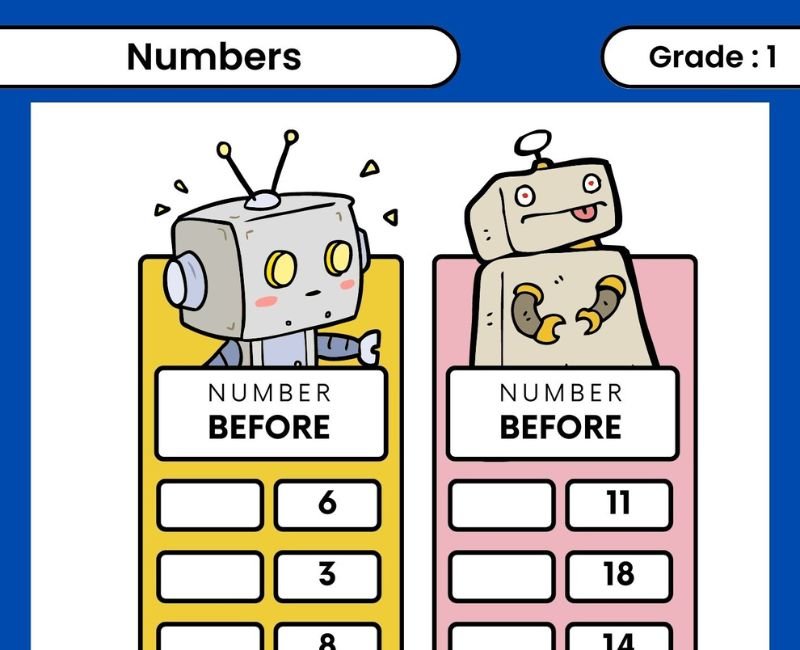
A number line helps children see that each next counting number is one more. Use it to find the number before, after or between two numbers. For example, 13 comes before 14, 15 comes after 14 and 14 lies between 13 and 15.
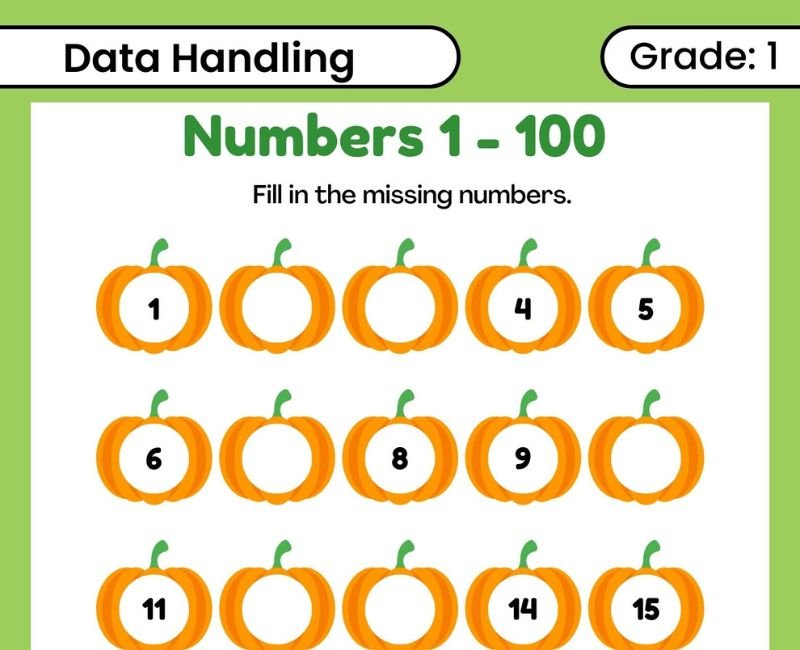
Worked example: 16, __, 18
Count forward from sixteen: sixteen, seventeen, eighteen. The missing number is 17.
Practise counting backwards too. Start with a short sequence such as 10, 9, 8, 7, 6. Later, try counting backwards from 20. Children can point to a number line while learning, then attempt the sequence independently.
Extra Numbers 1 to 20 Practice with Answers
Try these additional questions after the worksheet. Children can answer orally, write in a notebook or use counters where needed.
- Fill in the missing number: 3, 4, __, 6.
- Fill in the missing number: 9, __, 11.
- Complete the sequence: 17, 18, __, 20.
- What number comes before 14?
- What number comes after 19?
- What number lies between 11 and 13?
- Write twelve in figures.
- Write eighteen in figures.
- Which number is greater: 15 or 18?
- Which number is smaller: 20 or 16?
- Put these numbers in increasing order: 14, 10, 17.
- Complete the backward sequence: 20, 19, __, 17.
- What number has 1 ten and 6 ones?
- How many tens are there in 20?
Answers: 1. 5; 2. 10; 3. 19; 4. 13; 5. 20; 6. 12; 7. 12; 8. 18; 9. 18; 10. 16; 11. 10, 14, 17; 12. 18; 13. 16; 14. 2 tens.
A Simple Count, Build and Write Activity
Prepare number cards from 1 to 20 and a collection of counters. Let your child choose a card, read the number, count out that many counters and write the numeral. For numbers above ten, encourage them to separate a group of ten from the remaining ones.
Change the arrangement of the counters and ask whether the total has changed. Spreading out twelve counters does not make more counters; the quantity stays twelve. Recounting helps children check this for themselves.
Finish by asking your child to find the card for one more or one less, keeping the answer within 1 to 20. This short activity brings together quantity, recognition, writing and number order.
Explore More Class 1 Number Worksheets
Choose the next activity according to the skill your child needs to practise.
Before and After Numbers Worksheet for Class 1Practise neighbouring numbers and complete number sequences. Tens and Ones Worksheet for Class 1
Build understanding of groups of ten and individual ones. Comparing Numbers Worksheets for Class 1
Identify greater, smaller and equal numbers. Number Names Matching Worksheet for Class 1
Connect written number words with their matching numerals. Browse All Class 1 Maths Worksheets
Explore more practice for counting, operations, shapes and other maths topics.
Frequently Asked Questions
How can I teach numbers 1 to 20 to my child?
Combine saying the numbers with pointing to numerals and counting real objects. Begin with a comfortable range, then extend it towards twenty as your child becomes more confident.
Why can my child recite numbers but struggle to count objects?
Reciting a sequence and counting a collection are different skills. Ask your child to move one object for each number said, then state the total after counting.
How do I explain numbers 11 to 19?
Make one group of ten and add the extra ones. For example, fourteen is ten and four more. Let your child build the quantity before writing 14.
How can children find missing numbers up to 20?
Use a number line and count from the number just before the gap. For 15, __, 17, counting forward shows that the missing number is 16.
Should children learn number names alongside numerals?
Yes, connecting a spoken name such as “twelve” with 12 and twelve objects supports understanding. Introduce written word matching gradually, with reading support where needed.
Are answers included in this page description?
Yes. The fourteen extra practice questions above have an answer list for checking. These answers relate to the on-page questions.
 Download